

What went wrong?
Lessons from my 10 worst investments

When I first invest in a company, I’m never expecting to lose money. I’ve followed my process, completed my research, and I’m confident about the outcome.
Yet, have you ever considered the base rates?…….. For the average investor, what’s the likelihood of losing money on a single investment? Surely it must be low……right?
If you’d asked me prior to writing this article, I’d have lent on Peter Lynch’s words of wisdom - in this business, if you're good, you're right six times out of ten.
But, as I researched further, I came across a more detailed study. Buried within a book called The Art of Execution by Lee Freeman-Shor.
Back in 2006, Freeman-Shor allocated between $20 million and $150 million to 45 of the world’s top investors. Each portfolio was constrained to 10 best ideas and every trade was monitored for a period lasting 7 years.
On average, do you know what proportion of the trades made by ‘world’s top investors’ made money?
Well, you may be surprised to hear that it was only 49% - a mere coin toss! For every good investment, they also made a bad one.
I don’t know about you, but I often feel embarrassed when investments perform poorly. After all, I spend many hours thinking and writing about the subject. Surely, I should be right every time!?
This feeling is often compounded by the social media bubble, where it’s rare to find anyone posting about their mistakes (apparently, only bumper returns attract subscribers!).
So….just for fun, I’m going to brave the crowd and write publicly about my losses. Worst case, I feel ashamed by my horrible mistakes. Best case, I get to learn something along the way.
To do this, I’m going to use a factor called Contribution to Return, which I’ve tracked consistently for the past five years. For those who are not familiar, Contribution to Return is a combination of both the Total Return of an individual investment and its corresponding Portfolio Allocation. (For example, if I invest 8% of my portfolio into a single stock, which then drops by 50% over a year, my Contribution to Return would be negative ~4% i.e. 8% x - 50%).
Running this calculation gives me my 10 worst performing investments:
I must admit, that when I first compiled this list, I was pleasantly surprising to see that my biggest detractors only caused a negative portfolio contribution of ~4%.
Unfortunately, my mood quickly soured when I began thinking about the Opportunity Costs. A relatively short downturn, say over a year, before a large recovery, is not necessarily a problem. In fact, I’ve often found that temporary, un-realised losses, are required whilst waiting for a turnaround. On the other hand, holding a mediocre investment for many years before selling at a loss sucks up valuable capital and prevents better prospect being included.
With this in mind, I’m going to look back at three multi-year investments that I no longer own. All of which lost money. For each, I’ll attempt to extract some key failings and pick out a single main takeaway. A lesson that’s almost certainly overly simplistic, but could be a valuable explanation of why this investment failed.
AssetCo (ASTO)
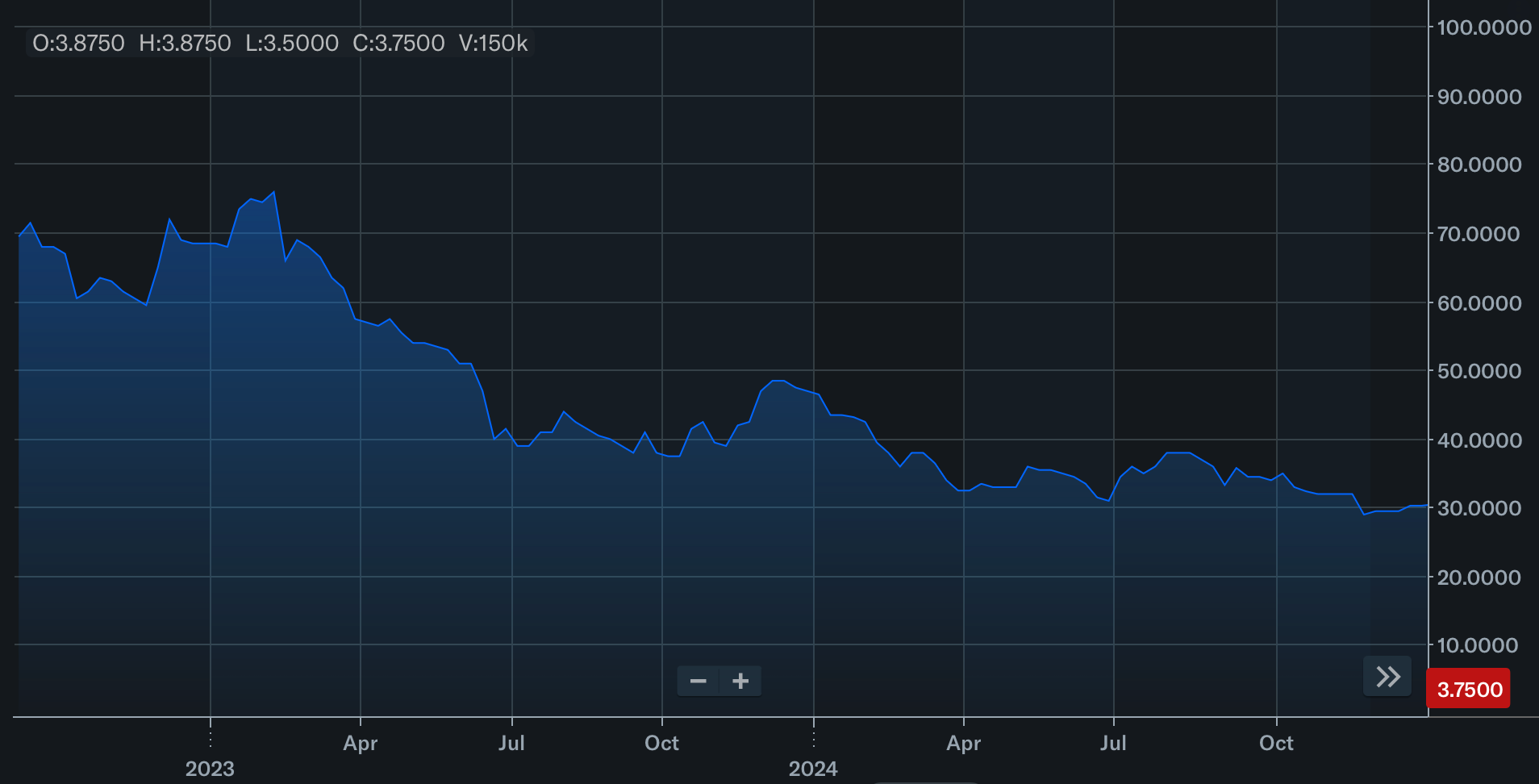
When I started buying shares in 2022, AssetCo had recently transformed from a cash shell into a highly acquisitive Asset Management business. At the time, I summed up the investment case in an article called Opportunistic Value.
Here’s an extract:
The catch here is timing. Firstly, there’s cash burn.
If you believe management, the business is nearly cash flow positive, but if you conservatively use the historic cash burn, AssetCo will require financing in less than 2 years.
Secondly, the Parmenion sale rumours have been circling for some time. If true, the sale would provide a catalyst for a sizeable re-rating of the stock. If not, the stock could well continue to tread water for years.
As it turned out, both of these risks materialised.
Operating cash flow was negative ~£18 million over the next two years (to 30th September 2024), which in truth was much higher than I expected. The cash buffer dwindled, and in late 2024, I sold my investment due to concerns about a potential bankruptcy (or capital raise).
Main takeaway - A net cash balance sheet won’t protect against multi-year cash burn.
Pressure Technologies (PRES)
Pressure Technologies was one of my first public posts - Is there quality hiding beneath the rubble?
Looking back, I think my downside analysis was poor:
Given the quality of CSC and the sensible actions of the management team, I have been buying shares at a reasonable valuation based solely on the defence business.
The specialised and mission critical nature of these products combined with long-term defence contracts provides a sticky source of predictable (albeit lumpy) contract cashflows.
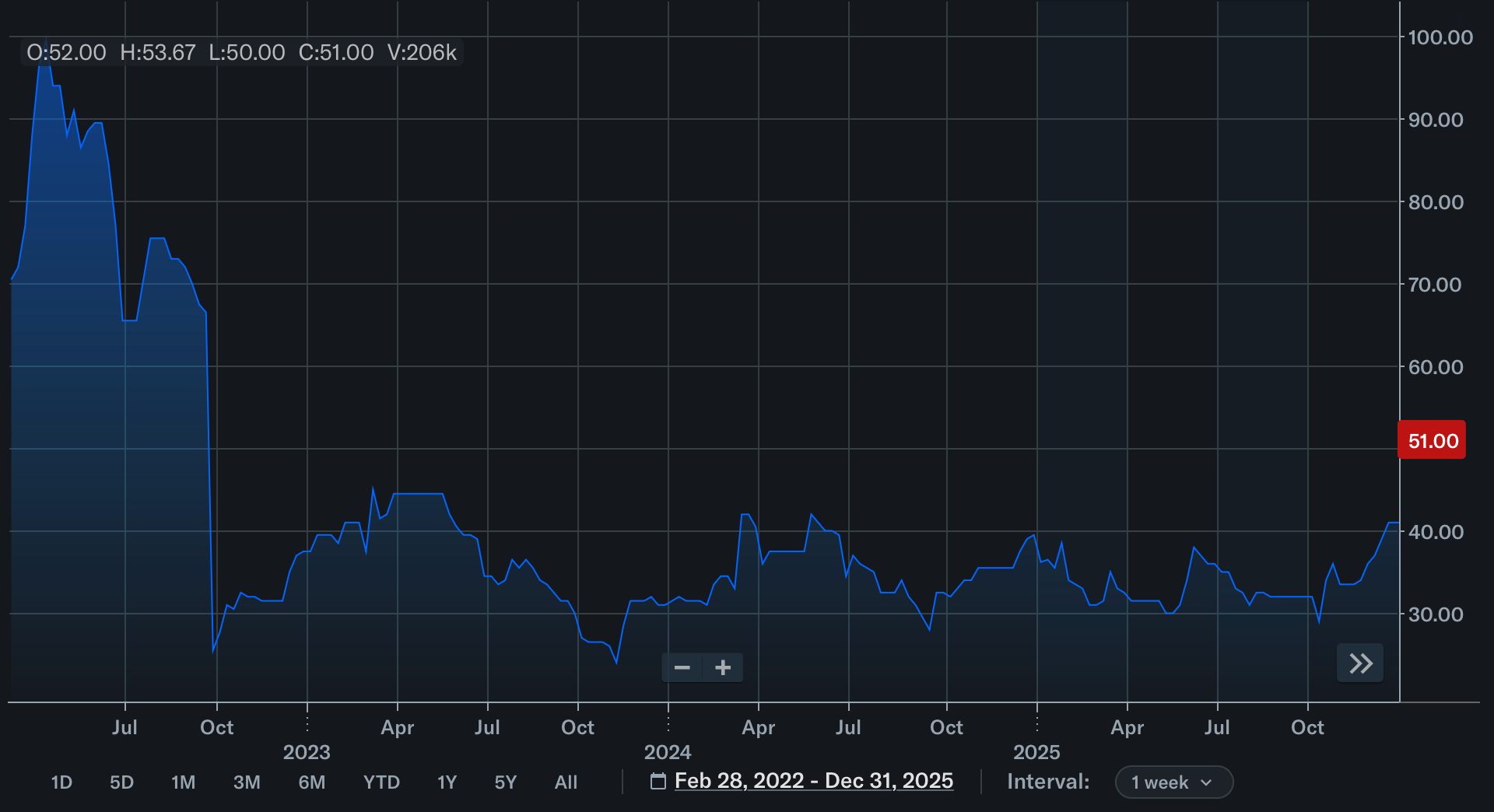
My valuation methodology, based solely on the defence business, was too optimistic. I didn’t account for the lumpiness of the cashflows and expected operational improvements to come quickly, whereas in reality they took many years.
Unfortunately, Pressure Technologies lacked a strong balance sheet that could absorb years of losses. So, after an earnings miss in late 2022, shareholders were diluted through a capital raise. The market reacted accordingly.
After years of mediocre performance, I exited in October 2025.
Main takeaway - Never combine a lumpy business and a weak balance sheet.
Schmitt Industries (SMIT)
Schmitt Industries was one of my earlier investments, before I started writing publicly.
In 2020, an activist investor kicked out the management team and took over the board, attracted by a strong balance sheet. Using the company’s cash, they made a single acquisition into an Ice Cream company called Ample Hills (if you live in New York, you’ll probably have heard of it!).
At the time, I was attracted by the situation. Ample Hills had been forced into a temporary bankruptcy by the COVID shutdowns, and would surely recover once the world started opening back up.
When I invested, Schmitt Industries had ~$10 million in cash.
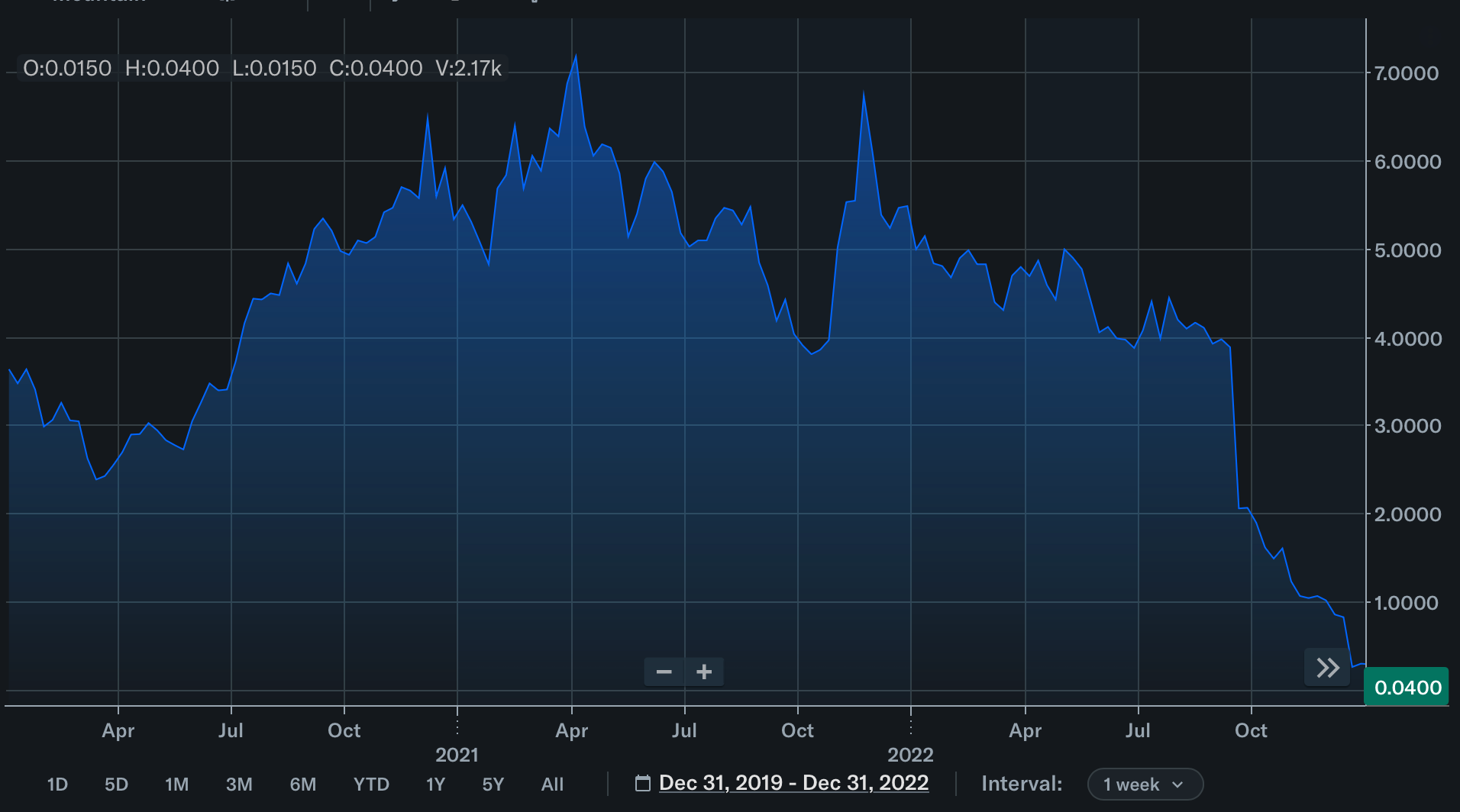
After paying the bargain price of ~$1 million for Ample Hills, the business burned through a whopping ~$8 million in Operating Cashflow during its first year of ownership! Again I’d misjudged the potential losses, and fearing bankruptcy, I sold out during 2022.
With this one, I got particularly lucky. Almost immediately after I’d sold, the share price crashed by 99%!
Thus far, there has been no recovery.
Main takeaway - A net cash balance sheet won’t protect against multi-year cash burn.
Conclusion
Going through this exercise was much more useful than I initially expected.
It’s clear that my largest losses (so far!) have come from unprofitable enterprises eroding a strong balance sheet. They have also come from owning business with short operating histories where the downside is difficult to assess.
If I’m going to take one lesson away, it would be to prioritise investments with longer operating history - ideally, with multi-year cash generation. Instead of investing in highly unpredictable startups.
Obviously, this is a conclusion that stems from a tiny subset of my investments over a relatively short time period. Therefore, it must be taken with a pinch of salt.
Yet, on the whole, I’ve found this an incredibly cathartic exercise and one I’d highly recommend to you all. Remember, you’re not alone - even some of the world’s top investors are only right around half of the time!
Adrian, this is a really useful piece. Thank you.
This probably explains why my approach has never quite evolved into holding a handful of large positions. I realise that limits the potential upside, but so be it.
Since the GFC the normal tailwind of growth hasn't really been there (outside the US at least) and waters can seemingly be becalmed for long periods, even without disruption. I'm not sure management teams (and investors) had fully adjusted to that. The lack of capital available since 2021 really amplifies that.
It may be a bit of a cop out, but having a modest monitoring position with the potential to scale if the thesis appears to be playing out (with a bit of momentum rather than just a few green shoots) helps limit the downside even if it may not be optimal (although the UK small cap market is so moribund currently that it seems to take quite a lot to move a share price up in a sustained way - prospects in 18 months' time seem to be easily shrugged off).
Great write up Adrian - lots of food for thought in there well done and you aren’t alone!